Software Freedom Day 2026 — Wellington: Retro
Event held: Saturday 19 September 2026, 10:00–16:00
Venue: Victoria University of Wellington Te Herenga Waka, Murphy Building, Room MY501
We did it! We have rebooted SFD Wellington. The day ran like an extended meetup or workshop: cathedral in the morning, bazaar in the afternoon, and things came together nicely in the end. This page collects the highlights, the lessons, and the direction for SFD 2027.
Highlights
The reboot worked
After bringing SFD back to Wellington, the format of talks in the morning and a community-organised bazaar in the afternoon proved itself, and people are already talking about next year. Karakia opened and closed the event, with SFD Saturday falling inside Te Wiki o te Reo Māori.
The icebreaker
Richard facilitated the icebreaker session, in a format your organiser first saw at Chicago Penguin Day back in 2005. Notes from Richard to come; feedback from attendees has been great.
Talks
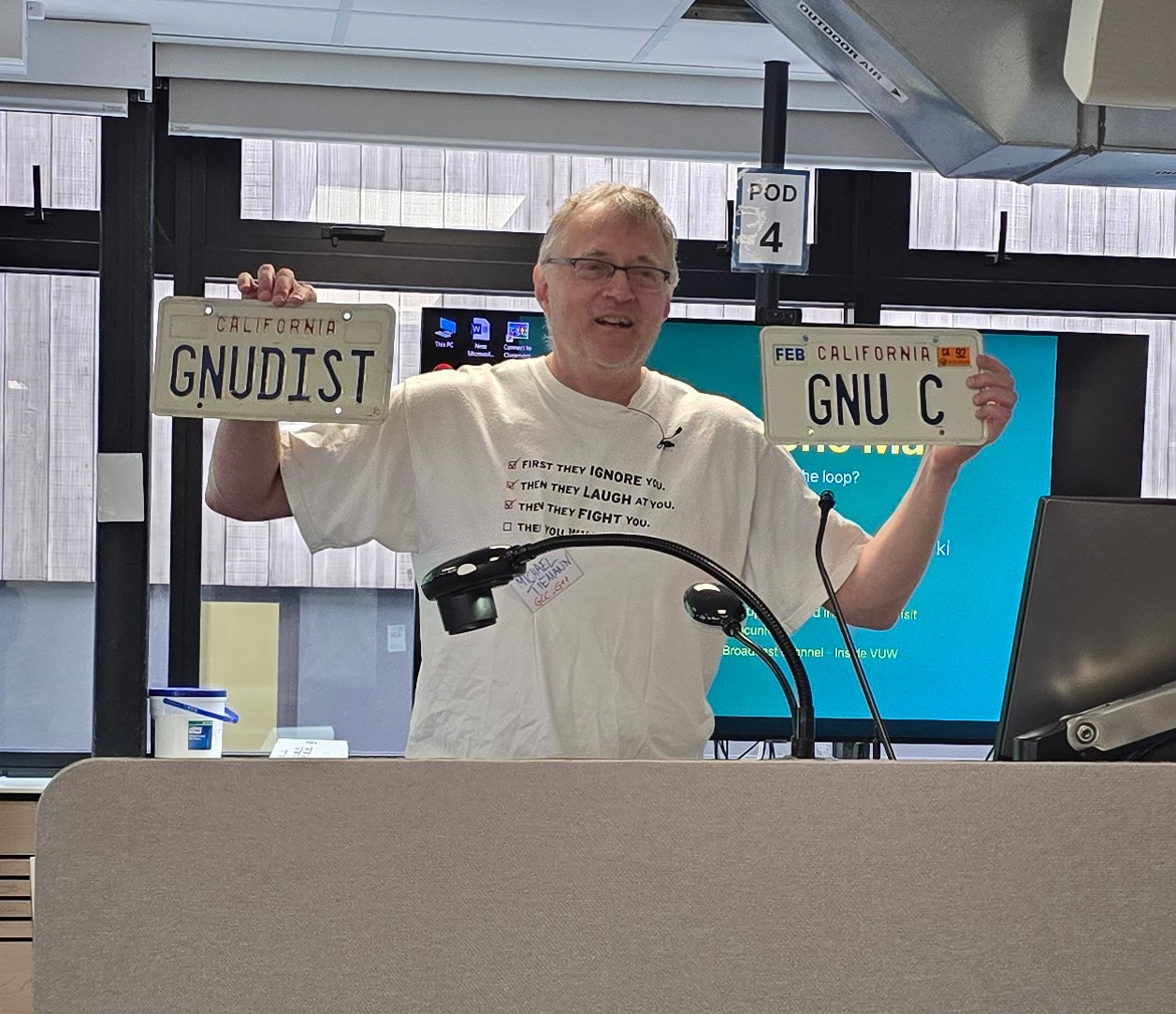
Michael Tiemann took us through a career in open source, stretching back to the early days when only a handful of people worldwide were optimising compilers for the various microarchitectures of the era.
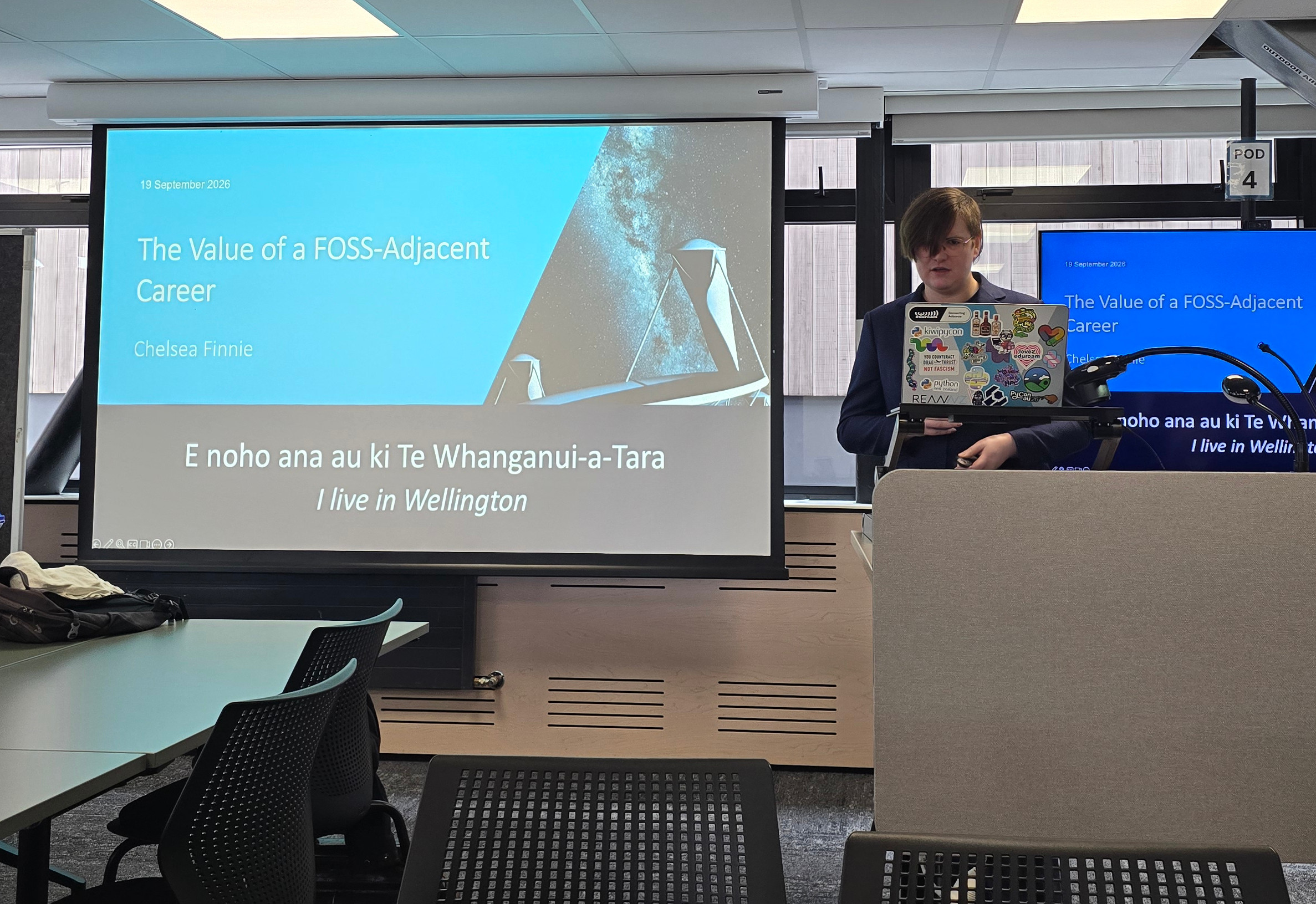
Chelsea Finnie, Chairperson of Python New Zealand, spoke on the value of a FOSS-adjacent career.
The bazaar organised itself
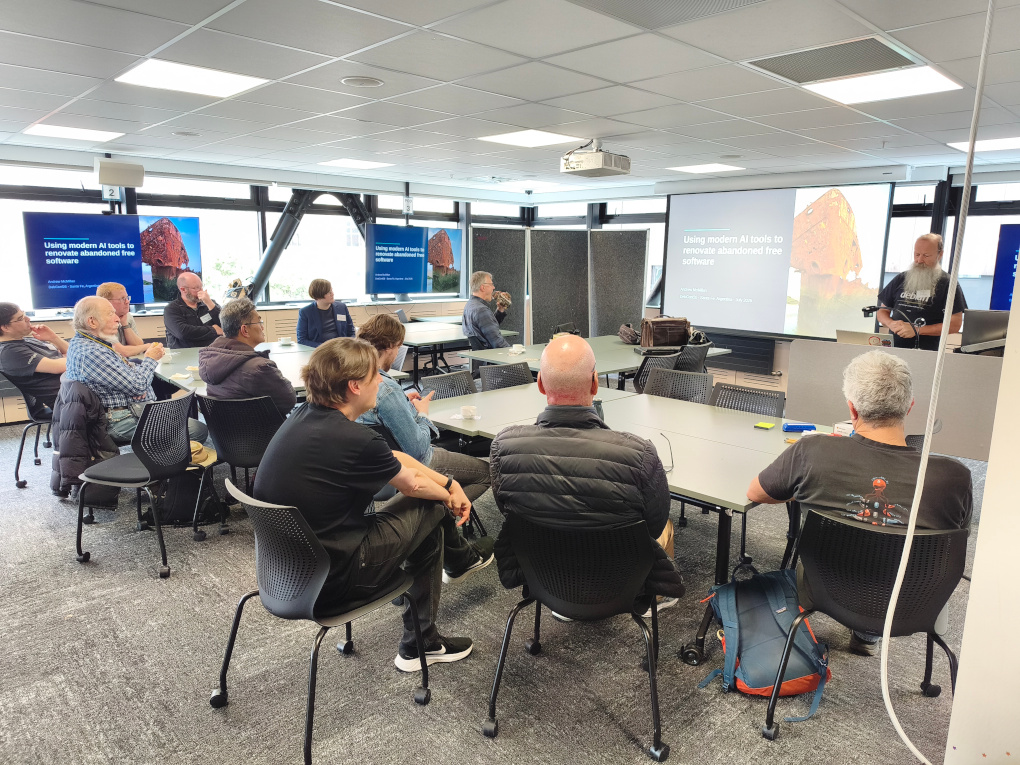
The afternoon sessions self-organised into two groups who held discussions on topics like the use of AI in open source and how your workflow has changed over the past year, followed by a series of presentations proposed by the community.
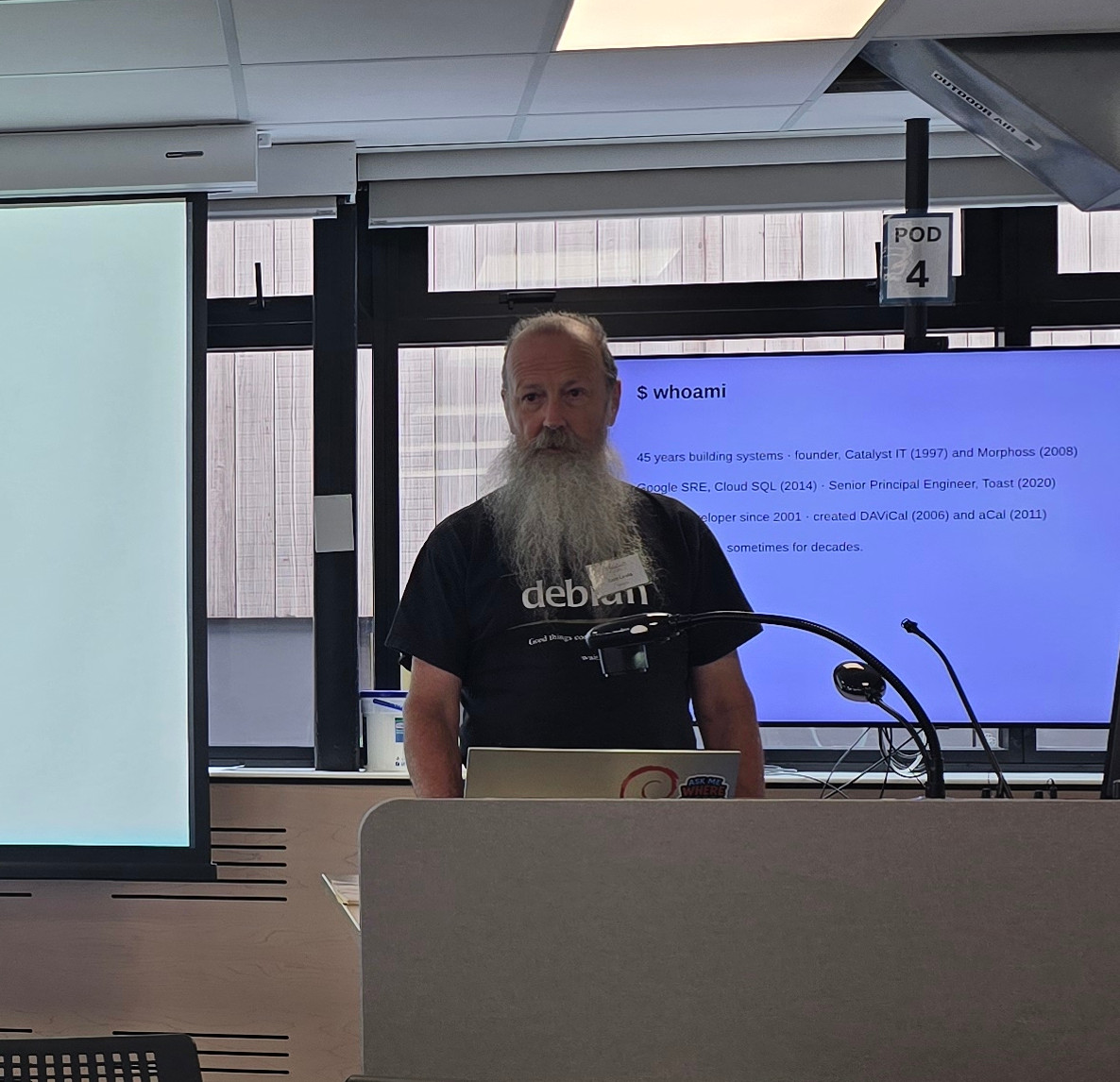
The send-off
Chelsea's rendition of "Leave Her Johnny" was the perfect way to close the day: SFD 2026 fell on International Talk Like a Pirate Day, and we sailed out on that. 🏴☠️
Feedback
Feedback has been collected from many attendees and is being edited for publication here. A few items so far (anonymised, shared privately):
"Thank you for organising and hosting a really interesting and informative day. I felt well out of my depth with all the amazing people making magic happen from code."
One attendee had feedback on the icebreaker session: people seemed to clump together on the Likert scale rather than spreading out across it.
One attendee with a geospatial background offered an interesting perspective on AI in cartography: AI-generated maps are being used to create convincing disaster-like settings for disaster-management scenarios instead of using and testing actual data layers, and hallucinations creep into step-by-step instructions even when established geospatial alternatives already exist.
Another attendee struggled to hear and follow the various talks and sessions:
"Yesterday presented some hearing problems for me that I'd like to think about and explore a little in the meantime. I enjoyed things enough to make sure I can hear more of contributions around tables and questions from the floor. Just a thought anyway."
Useful food for thought as we consider an accessibility-themed 2027 and think about where AI tooling genuinely helps.
Another attendee sent through some practical additions: ensure markers and nametags are on hand with backups if needed (including for facilitation), and choose a space with an outdoor area for smokers and maskers. The discussion circles would have benefited from ground rules (each person taking only 1/nth of the time, no one talking over anyone else) stated at the outset and reiterated through the session; keeping the conversation balanced proved tough at times.
They were also frank that the event fell well short on gender balance. Something to work on actively for 2027.
[TODO: more attendee feedback quotes]
Discussion Session Notes
AI in Open Source
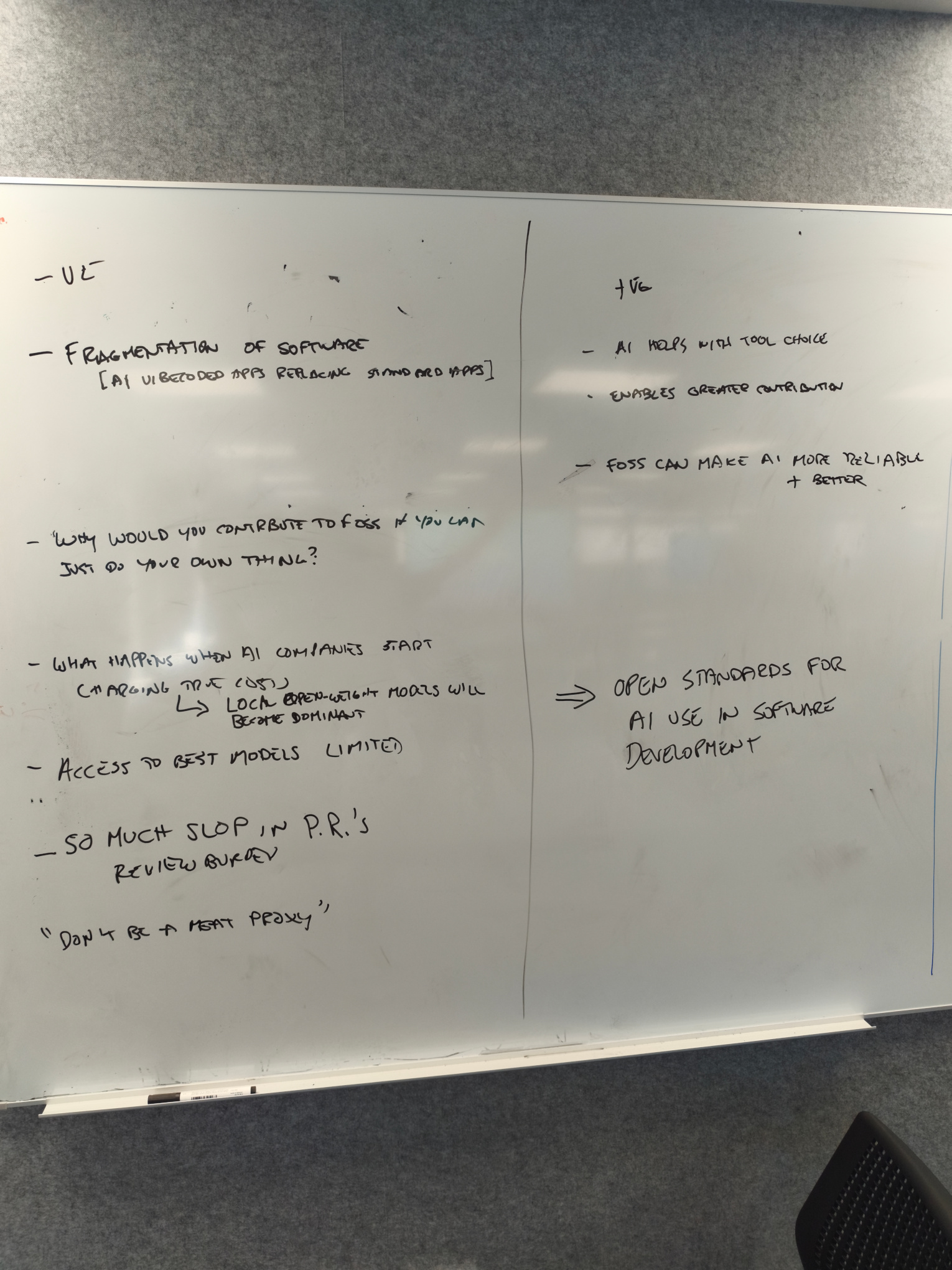
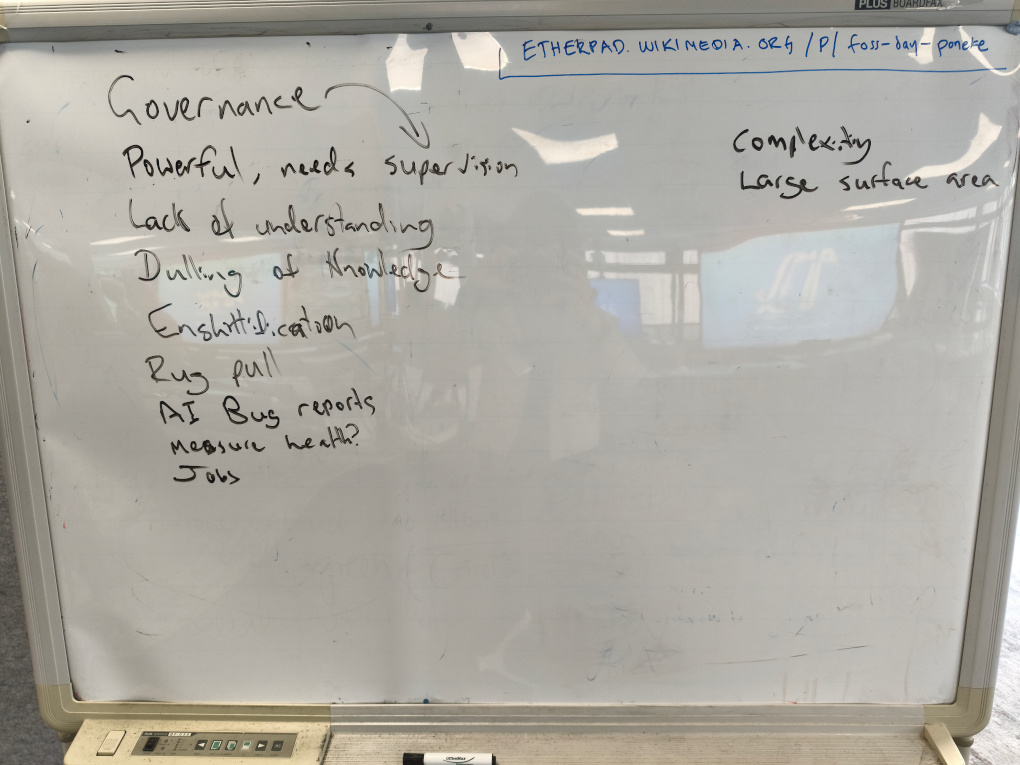
How has your workflow changed?
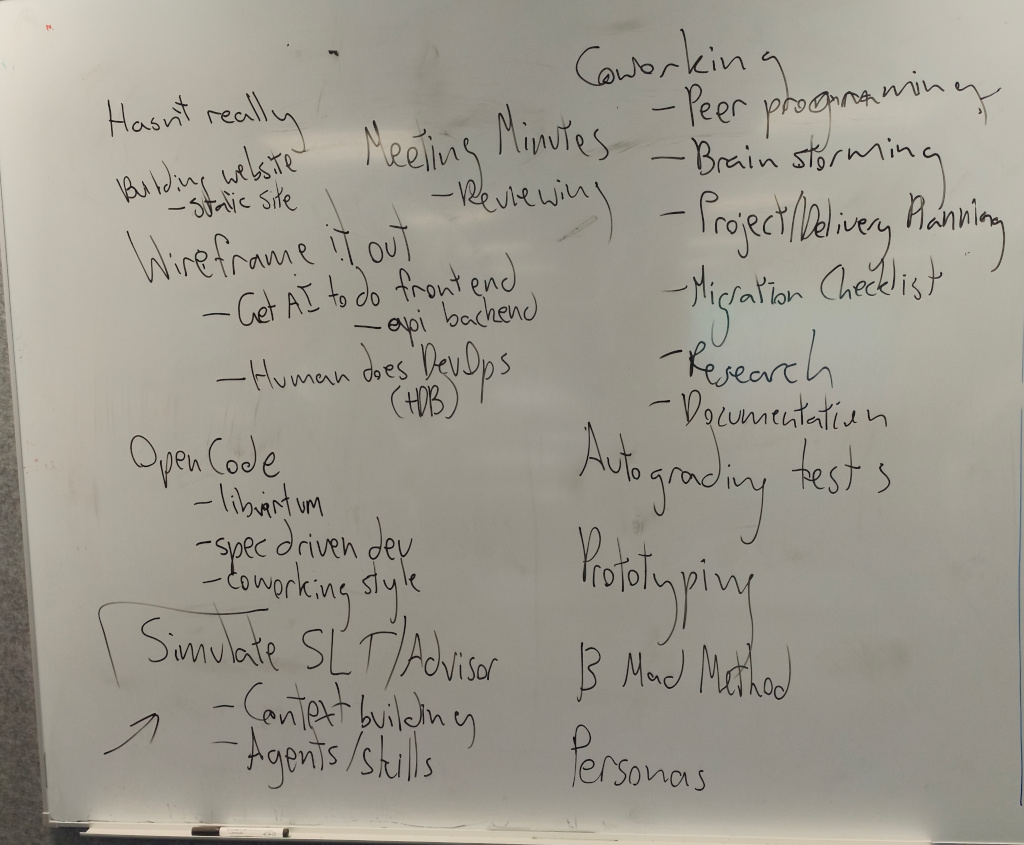
Photos from the day
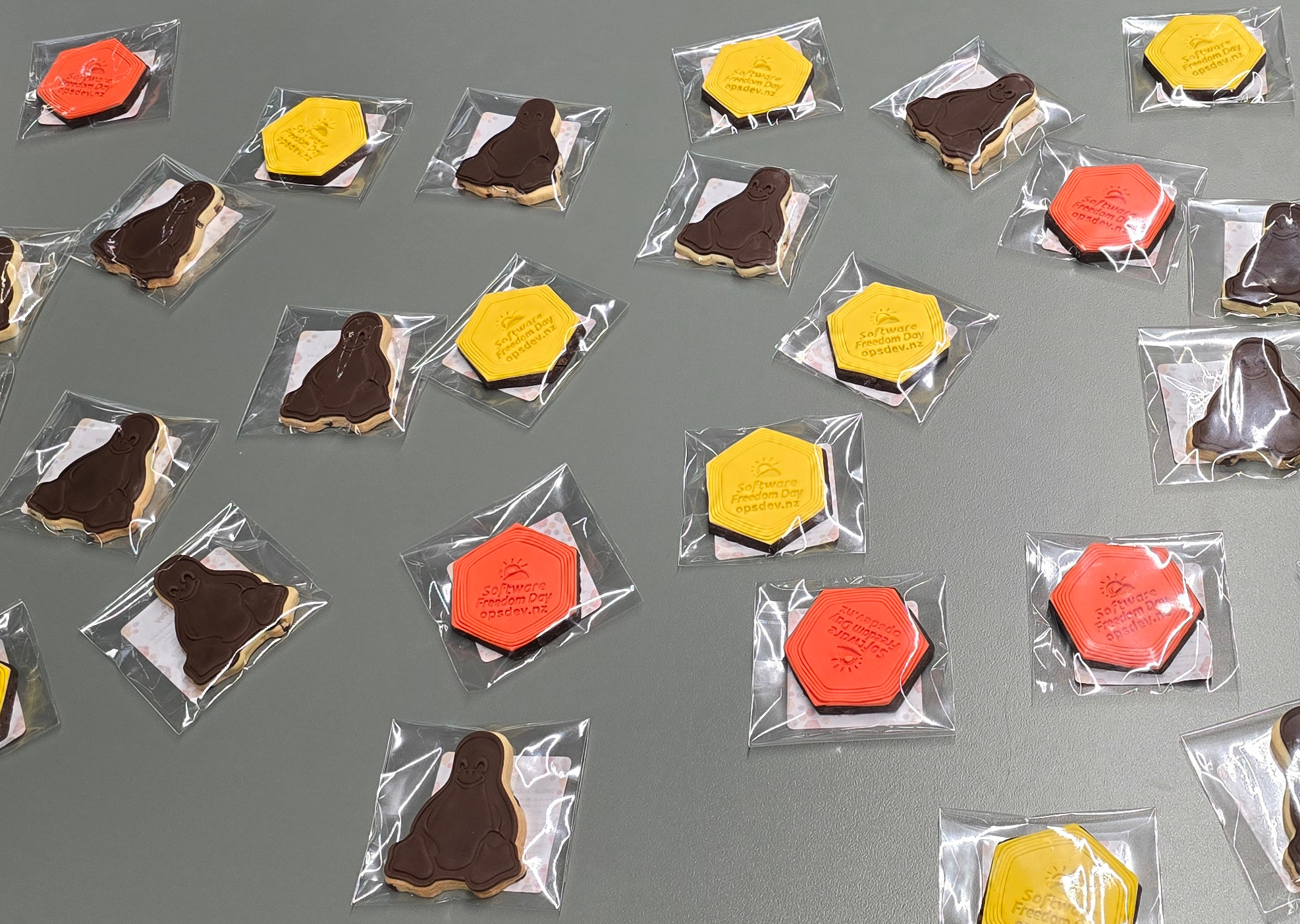
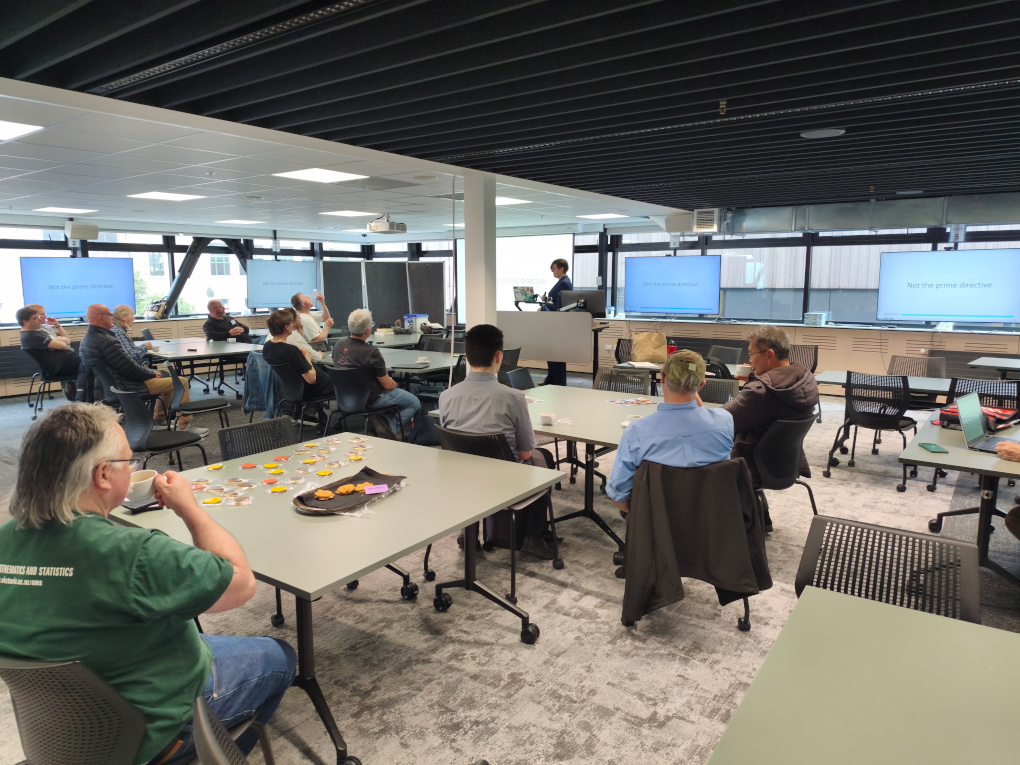
Tux-shaped cookies from Cookie And Me and catering from Canapé kept everyone fuelled through the day.
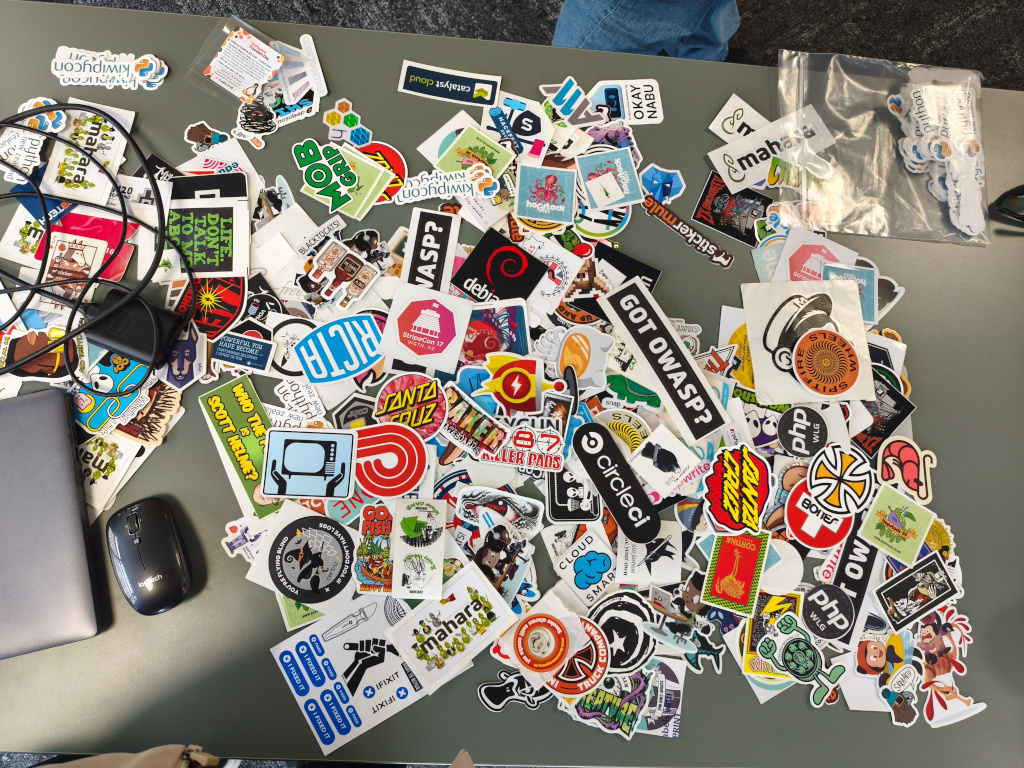
Stickers!
Our group.

Lessons
Lesson #1: No AI art for the event flyer
This was the big one. We didn't realise how strongly people feel about AI-generated art, and once we realised we couldn't distribute the flyer we had created, it reduced our exposure on campus and limited how far we could get the word out ahead of the event.
For the Humanitix event page we made a simple collage in GIMP from Google Maps imagery (fine to use with the Google copyright displayed) plus generally accepted public-domain logos: Tux, GCC, the Gnu emerging from the egg, and Python. That worked.
Next year: engage a graphic designer — ideally a graphic design student, paid or on a volunteer basis — and start on the flyer much sooner.
Lesson #2: Venue access vs. venue quality
The room itself was great, but getting there required student or VUW staff card-swipe access to the door and the elevator. We managed it fine, but for an event like SFD it's nicer to have a community centre or similar facility where people can come and go as they please, and where curious passers-by can be drawn in. A community centre, mall, or city-centre location in a higher-traffic area is desirable.
For our purpose of rebooting SFD in Wellington, this venue worked well, thanks to the Victoria Engineering Club.
Lesson #3: The advertised GPG keysigning session didn't happen
The event page promised a Debian-style GPG keysigning session, and it simply didn't eventuate. I went so far as to prepare a doc with my key information to print out, but forgot to print it, and no one mentioned signing keys all day. Next year: give it a scheduled slot, print key fingerprint slips for the door kit, announce it, or don't advertise it.
SFD 2027
Discussion started naturally during the event, and the direction so far:
- A different venue (see Lesson #2).
- Theme: Accessibility — inspired by the SFD group in Tehran, Iran, who ran their event on this theme. At least one 2026 attendee had hearing issues and some trouble keeping up, so this matters to us directly.
- Flyer design engaged early — graphic design student, well ahead of the event (see Lesson #1).
- GPG keysigning, properly scheduled — or not advertised at all (see Lesson #3).
A sfd-2027/proposal.md will follow as planning firms up.
Thanks
- Richard — event facilitation, karakia and running the icebreaker session.
- Tamara — session planning and early organising support.
- Ian — Housekeeping info and tech support!
- Victoria Engineering Club — the room at VUW, and helping guide us in!
- Michael Tiemann and Chelsea Finnie — Our main speakers.
- Canapé and Cookie And Me — catering and Tux cookies.
- Everyone who donated through the OpsDev.nz Open Collective, and every attendee who made the bazaar what it was.
Ngā mihi,
John Billings — john@opsdev.nz